
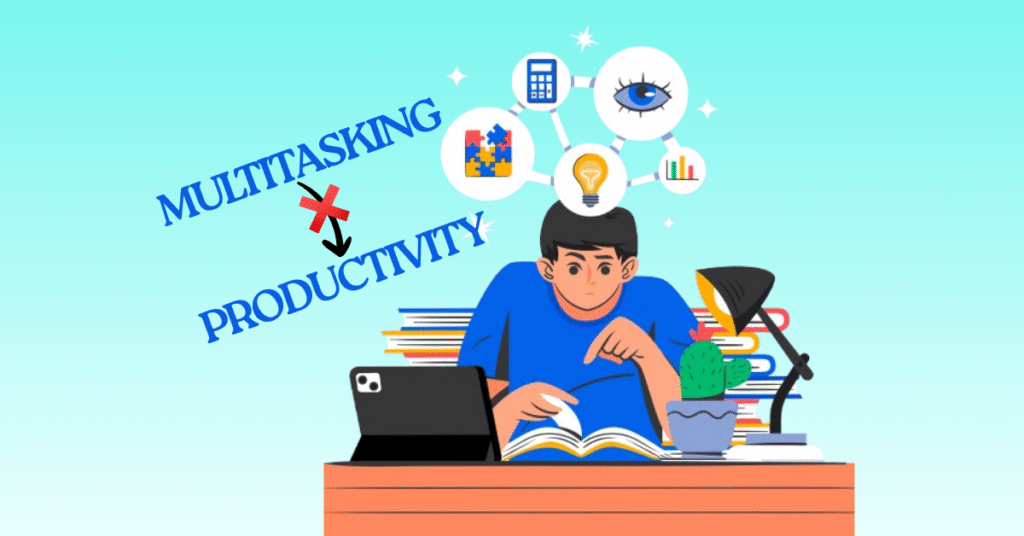

Introduction
Think you’re getting more done by juggling multiple tasks at once? You’re not alone. In today’s hyper-connected world, multitasking is often viewed as a badge of honor. We switch from emails to social media, from assignments to texting, often within the same minute — believing we’re achieving more. But neuroscience says otherwise.
In reality, multitasking is not a superpower — it’s a productivity trap. This blog will walk you through what happens in your brain when you multitask, why it makes you less efficient, and what you can do instead to truly optimize your focus and productivity.
What Is Multitasking?
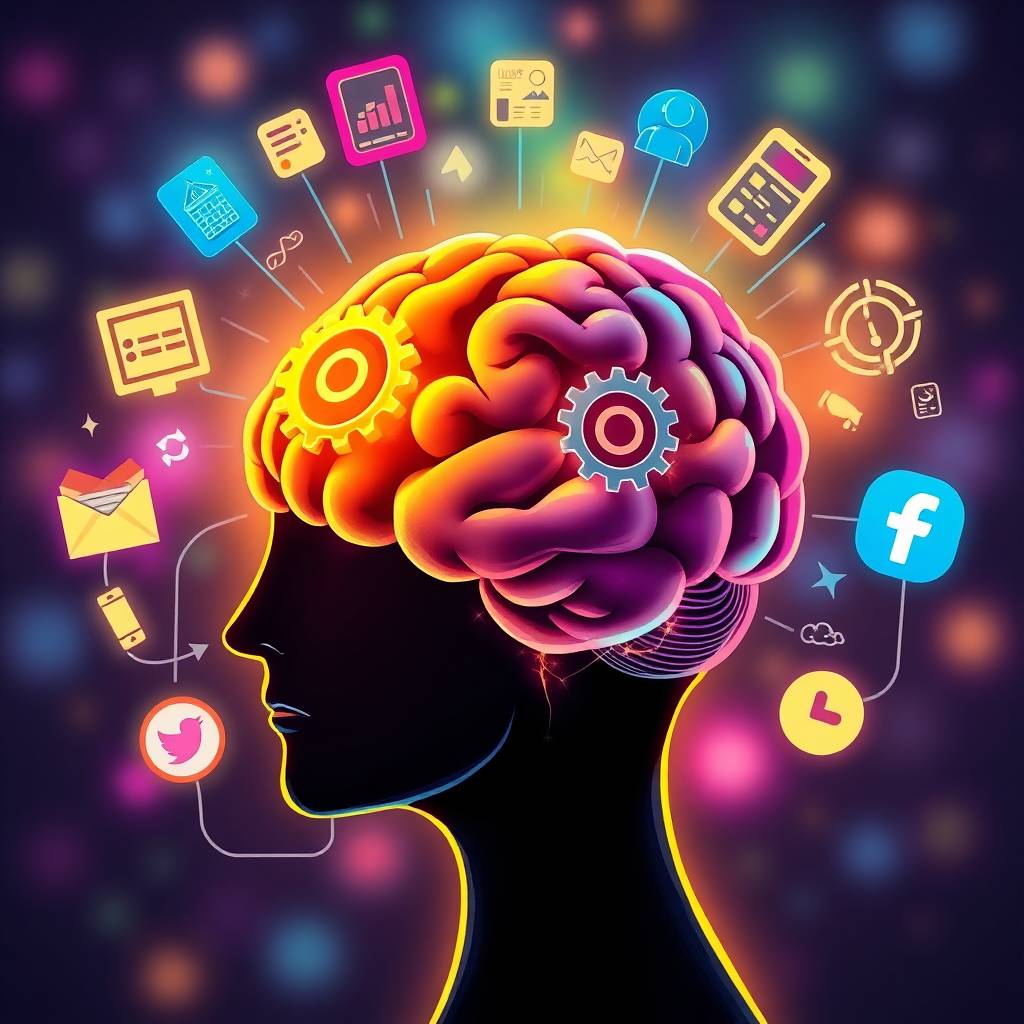
Let’s get something straight: most people don’t multitask. What they do is task-switch — rapidly jumping from one task to another. True multitasking (doing two cognitively demanding tasks at the same time) is neurologically impossible for most people.
Your brain relies on the prefrontal cortex to manage focus and decision-making. When you “multitask,” you force this part of the brain to constantly shift gears. This process is mentally exhausting and incredibly inefficient.
What Neuroscience Says About Multitasking
From a neuroscience perspective, the brain operates best when it can concentrate on one task at a time. Here’s why:
- Your brain has a limited working memory, which can only hold a few pieces of information at once.
- Each switch between tasks creates a cognitive load, requiring mental energy to reorient.
- The anterior cingulate cortex helps regulate attention — and it gets overwhelmed when constantly pulled in different directions.
A study at Stanford University found that heavy multitaskers perform worse at task-switching than people who focus on one task at a time. Their brains are more distracted, less efficient, and less able to filter irrelevant information.
The Hidden Cost: How Multitasking Hurts Your Brain
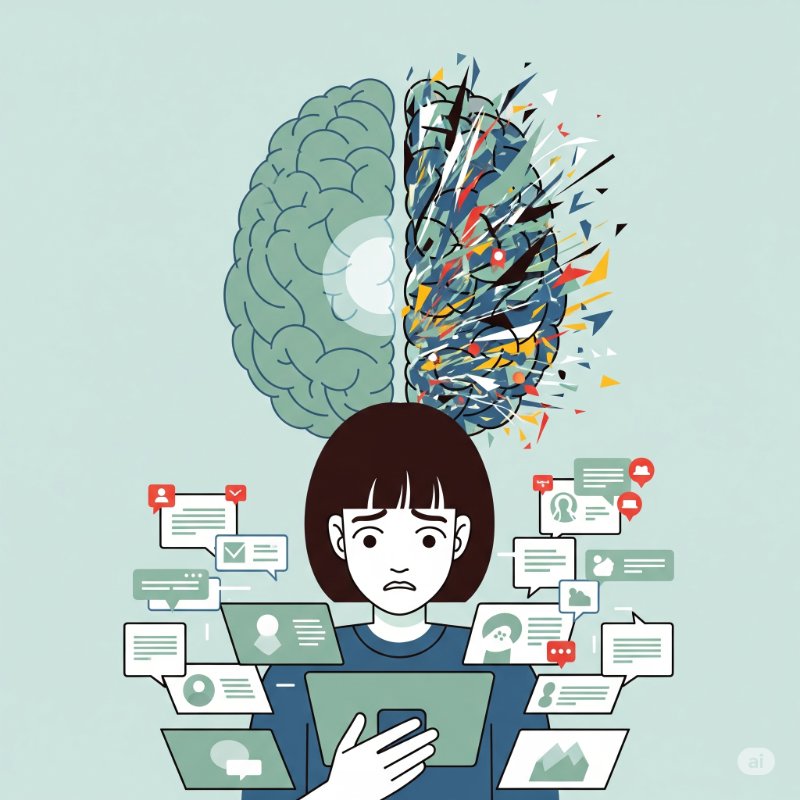
Multitasking doesn’t just make you less productive — it actively damages your cognitive performance over time.
Here’s how:
- Reduces short-term memory accuracy
- Weakens your attention span
- Increases stress hormones like cortisol
- Leads to mental fatigue and even brain fog
- Diminishes your brain’s gray matter density in areas related to emotional regulation and decision-making
Over time, the brain becomes addicted to the stimulation of constant switching, making it harder to focus deeply on any single task.
Why You Feel Productive (But You’re Not)
So why do we keep doing it? Because it feels productive.
Every time you switch tasks — check a notification, open a new tab, scroll Instagram — your brain gets a tiny hit of novelty. This triggers a reward response, making you feel like you’re achieving something. But what’s really happening is that your brain is experiencing a loop of stimulus-seeking behavior with no real progress.
You’re busy — but not effective.
Real-World Examples That Prove the Point
- Studying with YouTube open in another tab? Your comprehension and retention drop significantly.
- Replying to texts while writing an assignment? Your brain takes, on average, 23 minutes to fully refocus after each interruption.
- Watching Netflix while working out? You might feel good, but your physical and mental performance are both split.
Multitasking fragments your attention and creates micro-distractions that break the flow of deep work.
How to Break Free from Multitasking (and What to Do Instead)

The opposite of multitasking isn’t laziness — it’s intentional single-tasking, also known as monotasking. Here’s how you can train your brain to focus better:
🔹 1. Practice Time Blocking
Divide your day into chunks where you focus on one activity at a time — no interruptions. Tools like Google Calendar or Notion can help.
🔹 2. Use the Pomodoro Technique
Work for 25 minutes, then take a 5-minute break. This boosts sustained focus while giving your brain necessary rest intervals.
🔹 3. Create a Distraction-Free Environment
Turn off unnecessary notifications. Use browser blockers like Cold Turkey or the Forest app to stay locked in.
🔹 4. Prioritize Deep Work
Schedule your most important tasks for when your brain is most alert — usually in the first 3 hours after waking up.
🔹 5. Try a Digital Detox
Even a short-term break from overstimulation can help reset your focus. Read our guide to Digital Detox to learn how.
Conclusion: Doing Less to Do More
Multitasking isn’t a sign of productivity — it’s a red flag. Neuroscience shows that our brains are not built to handle multiple streams of focus at once. By breaking free from the myth of multitasking and embracing focused work, you’re not only improving what you do — you’re protecting how your brain functions.
Start small. Choose one task. Block distractions. And take control of your attention.
FAQ
Q: Does multitasking damage the brain?
A: Chronic multitasking has been linked to reduced gray matter in the brain’s anterior cingulate cortex and poor memory performance.
Q: Is multitasking ever beneficial?
A: Only in very low-cognitive tasks like walking while listening to music. For most meaningful tasks, it’s better to focus on one at a time.
Q: How do I stop multitasking at work or while studying?
A: Use time-blocking, focus timers, and eliminate distractions from your workspace. Try batching similar tasks together.
Q: Can you train your brain to multitask?
A: You can become faster at task-switching, but the cognitive cost remains. It’s more effective to train your brain for sustained attention.
Enjoyed this blog?
Subscribe to our newsletter for more science-backed content on focus, productivity, and digital wellness.